HIV PEP, better known as HIV morning – after pill is proving to be an efficient preventive therapy that could save lives if taken correctly at the right time.
Continue readingHIV Morning-After Pill: How it Works and When to Take it

HIV PEP, better known as HIV morning – after pill is proving to be an efficient preventive therapy that could save lives if taken correctly at the right time.
Continue reading
The just concluded Olympics and Paralympics held in Rio De Janeiro, Brazil were not just about sporting activities. The Olympics provided an opportunity for a campaign dubbed #EuAbraco or #iEmbrace inspired by values such as diversity, friendship and togetherness.
The campaign was a massive public health initiative of UNFPA, Brazil’s Ministry of Health, the European Union and the Joint United Nations Programme on HIV/AIDS (UNAIDS). The initiative concentrated on sharing information on sexual and reproductive health, human rights, tolerance and togetherness as well as giving condoms to the Olympics participants, spectators and fans.
The #iEmbrace campaign started giving out leaflets on gender-based violence, racism, human rights and preventing sexually transmitted diseases, HIV and Zika on the 4th of August 2016. More than half a million male and female condoms were also distributed and this continued till the end of the activities with the Paralympic games ending on 18th September.
The campaign also used social media to reach out to people by launching the “hugmeter” which allowed participants to post photos of them hugging other people.
Poverty, discrimination and diseases such as HIV and Zika are all challenges that face the marginalized communities in Brazil. For instance, about 4 million women in Brazil are believed to need contraceptives. #EuAbraco aimed to take advantage of the Olympic’s spirit to reach their message to these populations.
The campaign targeted large crowds of people such as the live sites where mammoth crowds were drawn by large screens showing the Olympic events. An adapted bus offered by the municipal administration offered condoms, HIV testing and information on sexual and reproductive health information to all those who came across it. Moreover, condom dispensers were installed at the Olympic Village by the Ministry of Health in conjunction with the Brazilian Olympic Committee. Olympics participants were not left behind as it is reported that condoms were made available to them.
The hugmeter, inspired by the 6th principle of the Olympic Charter; the principle of non-discrimination, helped to create awareness of the activities done under the campaign. The hugmeter took into consideration the total wingspan of everyone who was part of the hug and putting the numbers together to a symbolic collective hug target.
Values of equality, non-discrimination and respect, important in the promotion of human rights, were shared in an easy but fun way with the #iEmbrace campaign. The campaign also shed some light on important issues facing people all over the world that they do not have adequate information on.
These issues include sexual and reproductive health, racism as well as HIV and Zika transmission. Through the campaign, messages on how the two viruses are transmitted were shared. Additionally, the campaign sent out messages on the prevention of HIV and the new Zika virus which is also spread by unsafe sex with infected persons. After all, knowledge is power.
The campaign encouraged fighting stigma and bias towards people living with HIV through sharing the message of friendship, diversity and unity and should be replicated around the world.
Prevention is always key to preventing the spread of STDs like HIV and Gonorrhea, which in recent years has mutated into a superbug that is hard to cure. Practice safe sex methods like using condoms, being faithful to a single sexual partner or even abstinence. If one lives an active sexual lifestyle, then frequent
If one lives an active sexual lifestyle, then frequent STD testing should be done in order to diagnose any potential infections early so that treatment can start as soon as possible. Sometimes, accidental exposure to the HIV virus happens, especially to health workers, this is where knowledge of potential life-saving options become critical – HIV PEP is such a treatment option where if treatment starts within the first 72 hours of exposure, chances of HIV infection becomes very low.
Contact Shim Clinic as soon as possible where if you have any questions or if you need treatment or testing straight away.
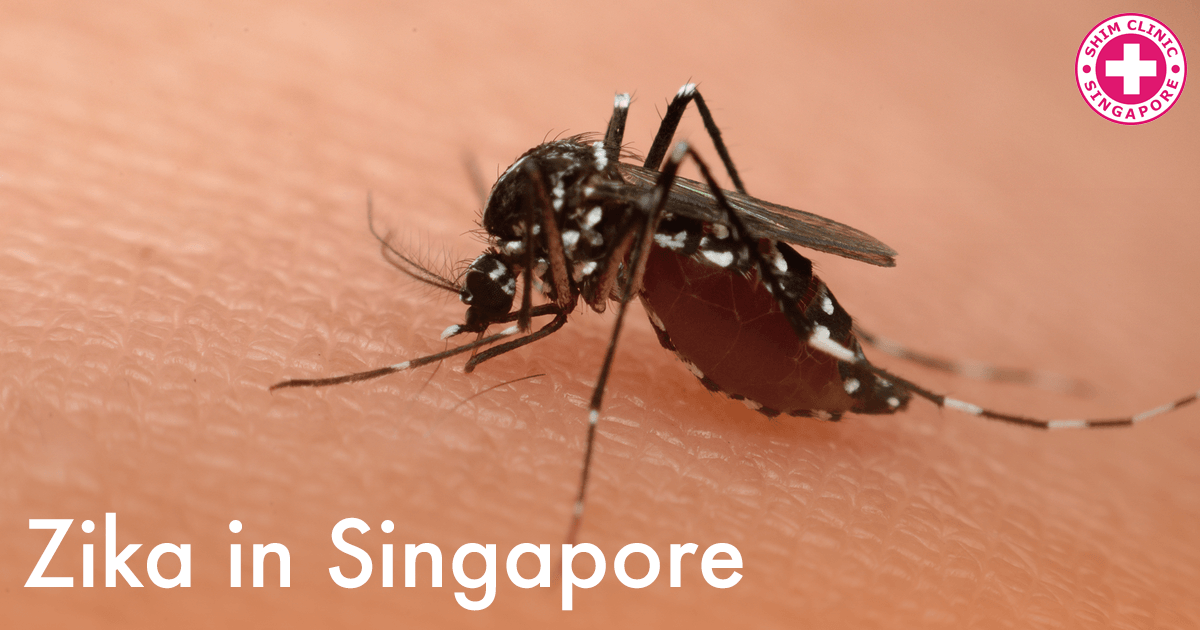
The Ministry of Health in Singapore is on high alert after World Health Organisation (WHO) confirmed 41 cases of locally-transmitted zika virus in the country.
Continue reading
Increased cases of treatment-resistant gonorrhea reported recently by the CDC spells doom for patient because it could soon be impossible to treat the prevalent STD.
Continue reading
Are you concerned about contracting HIV? Startups like Nurx are joining the fight against the spreads of HIV with new, accessible prevention options.
Continue reading
Dating app Tinder promotes sexual health and wellness with a brand-new section on its mobile app and website.
Continue reading
Syphilis screening with Rapid Syphilis Testing (RST) is cost-effective in low-prevalence settings and therefore highly recommended.
Continue reading
Extended azithromycin proven to be the best medicine to eradicate Mycoplasma Genitalium compared to Doxycycline.
Continue reading
How can people living in far-off regions get quick HIV testing? The United Nations may have the answer with new drone technology.
Continue reading
There is a simpler and more affordable molecular test that shows the reduction of the genus Lactobacillus and an increased species variety of vaginal microbiota. This test can function as a practical substitute investigative method for the assessment of bacterial vaginosis (BV).
BV occurs when the vaginal microbiota is in an abnormal state characterized by a reduction of lactobacilli, increased variety of the bacterial population and an elevated pH. BV is among the most common vaginal conditions in fertile, pregnant and premenopausal women.
Most people found to have BV will normally have consulted a doctor due to vaginal malodour. However, a patient can also suffer from BV without malodor or other visible signs and symptoms.
Some of the issues of BV that plagues doctors are high recurrence rates and treatment failure. This makes it necessary to develop a new and better treatment for BV. This requires identification of universal markers that are based on molecular methods.
A group of researchers from Netherlands, led by Joke A. M. Dols, conducted a study aiming to evaluate the vaginal microbiota sequencing of women who test negative and positive for BV so as to confirm the composition of bacterial populations that are associated with BV.
The researchers used a population of 40 adult women who had vaginal signs or symptoms, those that had been asked to go for STD testing or those who required an STD test because a sexual partner had a proven STI. Samples from the study subjects were collected in June and July 2012. 20 of these tested negative to BV and 20 tested positive.
Sample collection involved removing abundant mucus using a cotton swab and a standard cervical examination was performed. Another sample was also collected to test for Neisseria gonorrhoeae and Chlamydia trachomatis.
Out of the 20 BV-negative women, 18 were of European or Asian origin and 2 were of a Hispanic background. From the BV-positive population, 9 were of European or Asian origin and 11 were of a Hispanic background.
Out of the 40 women, two of them tested positive for VVC. 10 of the 40 women studied had STD. The most common STI among the 10 was C. trachomatis. No one studied tested positive to HIV, Gonorrhoea, Syphilis, Hepatitis B, Scabies, Moluscum contagiosum, PID or genito-ulcerative disease.
The study found that there are two clusters of bacterial populations in BV negative women. These clusters are dominated by either Lactobacillus crispatus or Lactobacillus iners. As for BV positive women, there are three distinct clusters.
The study also found that L. crispatus is not the only one responsible for keeping a BV negative state and is displaced when BV occurs in the woman. The researchers concluded that an overall increased variety of bacterial species in combination with a depletion of the genus Lactobacillus are good universal molecular markers to diagnosis BV correctly compared to the common Amsel test, Nugent scoring or other commercial tests.
Better methods of diagnosing BV are important because they help in creating better treatment methods that will reduce reoccurrence rates and treatment failure.
Read the full study here: https://bmcinfectdis.biomedcentral.com/articles/10.1186/s12879-016-1513-3