Knowledge on PEP among clinical medical students in developing countries is very low calling for inclusion of PEP in HIV curricula.
Continue readingFew Medical Students in Developing Countries Aware of HIV Prevention Drugs
Knowledge on PEP among clinical medical students in developing countries is very low calling for inclusion of PEP in HIV curricula.
Continue reading
Health News: College Campuses receive HIV Awareness from Love Heals Advocates, HIV Progression spotted on Charlie Sheen from Facial Skin Lesions, Recent Progress against Aids Marked in World AIDS Day at Palm Springs
Continue reading
In the news -Today reports better Life For Singaporean HIV Patients; Highest cases of HIV in Eastern Europe reported by WHO; The CDC in the US says HIV Prophylaxis can help millions
Continue reading
Overspending, corruption, and tax avoidance seem to have little to do with HIV rates. In 2012, the world watched stunned as Greece’s economy collapsed. Frantic negotiating with the EU seemed to have rescued the failing state, imposing strict austerity measures on the one prosperous nation.
Greece’s unemployment rose to 20%. In the younger demographic it rose as high as 60%. Cuts across the health system led to the abandonment of non-essential health programs, including the reduction to HIV screening of mothers, the clean needle exchange programs. (Kentikelenis et al., Lancet, Volume 383, No. 9918, p748–753, 22 February 2014).
Suicides and drug use rose. The number of women working in prostitution also rose dramatically (Linda Smith, International Business Times, 1st July 2015).
And HIV rates rose 200 fold.
In this first world country, the crisis saw HIV cut a swath through the disadvantaged population. Drug users injected more frequently rather than smoking or snorting as it gave more bang for their buck and without the clean needle program, HIV passed easily from one to the other in shared needles. Refugees, immigrants and married women, all barred from working legally in the Greek sex work system took to the streets and illegal brothels in a desperate attempt to find work. Lacking the protection of the state system they were open to abuse and HIV reared its ugly head once more.
The health care system was no longer able to afford a supply of antiretrovirals to all who needed them, much less post exposure medication to prevent infection like HIV PEP. Doctors had to be selective in who they were able to help. Those who would otherwise live with the inconveniences of a HIV infection found themselves at the mercy of full blown AIDS.
A shocking and scary truth was revealed. HIV, the plague of the 21st century was not under control as we thought. It was being held at bay with a plethora of government strategies, needle exchange programs, education. As soon as these barriers weakened, the plague surged forward to take new ground.
There is some good news to be found though. The low-cost prevention programs, needle exchange, provision of condoms, education, they are all still working hard, despite financial challenges, to stem this tide. If we can take anything from the tragedy of the crisis in Greece it is that the healthcare system, when given sufficient support, can make a huge difference to the spread of HIV. The cost Greece will incur in five or ten years when the AIDS epidemic makes itself known will well and truly eclipse any savings they have made in not buying clean needles. All these small efforts combine to make a huge difference to the health and well-being of the state as a whole and should be recognized for the good work they do.
References:
Kentikelenis et al., “Greece’s health crisis: from austerity to denialism”, Lancet, Volume 383, No. 9918, p748–753, 22 February 2014
http://www.thelancet.com/journals/lancet/article/PIIS0140-6736(13)62291-6/abstract
Linda Smith, “Greek crisis: Thriving sex industry shows austerity has violated women’s rights” International Business Times, 1st July 2015
A 3-day movement was started in Mumbai, India, to spread awareness of the use of HIV PEP as a preventive measure for rape victims from getting infected by the HIV virus. Several medical professionals and institutions took part in this movement. Although it is an established fact that the chances of a rape victim being infected by the virus is extremely low when treated within 8 hours of exposure, the treatment is not provided or mandated at a national level in India. This is what this movement is trying to change.
Dr Ishwar Gilada, who is the president of the AIDS society of India, was reported as claiming to the press in India that if a rape victim is given PEP treatment immediately, chances of infection can go down to as much as 100%. This movement comes after the recent rise in rape incidents in India. There were a reported 36735 rape cases in 2014 – statistics given by the National Crime Records Bureau (NCRB) statistics. Gilda said that HIV PEP therapy should be prescribed in addition to trauma care. The initiative to request for this medication should be made by both the relatives of the victims as well as law enforcement.
Read the full report here: http://www.uniindia.com/post-exposure-prophylaxis-can-prevent-hiv-infection-if-administered-within-8-hours-dr-gilada/others/news/254245.html
A study was made in London on the drug usage and sexual patterns on men who have sex with men. They study was made on 874 male participants who used the services of a chemsex support service provided by the busiest STD Clinic in London, the 56 Dean Street clinic. Chemsex is the act of using a variety of recreational and, mostly illegal, drugs to remove any sexual inhibitions as well as increase arousal and desire, resulting in periods of sexual intercourse that may last for days. One of the more popular drugs used is crystal meth.
Data collected from the survey revealed that 70% of the men who attended the clinic used drugs in all their sexual activities during the last six months. They had no recollection whatsoever of what sober sex feels like anymore. This shows a worrying dependency on drugs by these individuals for sex. In the group of men being studied, 32% of them were HIV positive, out of which 42 of them were not being treated with antiretroviral therapy and 64% of them did not use condoms during sexual activities.
For the remaining HIV-negative men, forty percent used condoms less than half the time and ten percent reported no use at all. 30% of these men were medicated with HIV PEP once at least during the last 2 years while 25% had taken the medication up to 10 times. Interest in PrEP treatment in this group of men who engage in chemsex is extremely high while a third of them do not that know such a treatment exist.
For the full report go here – http://www.aidsmap.com/London-clinic-survey-shows-impact-of-chemsex-on-condom-and-PEP-use/page/3009821/
At the 15th European AIDS Conference, speakers voiced concerns from public about the growing need for access to PrEP (Pre-Exposure Prophylaxis) to be used informally. PrEP is a treatment that uses anti-HIV medication to prevent people who are HIV-negative from becoming infected in the near future (up to about 3 weeks after). In Europe currently, like many other countries, PrEP is not funded by government bodies and can only be obtained privately from doctors on an individual basis rather than being a part of the public healthcare system – which means access is limited and more costly.
Many have sought to go around this issue by asking for HIV PEP (Post Exposure Prophylaxis) medication instead with the intention of using them as PrEP. There are national initiatives to push for making PrEP a part of HIV prevention strategies on national levels that is also fully funded, though it is still at an early stage, and moving at a slow pace. Much of the obstacles to making this medication part of the public health system in Europe is due to cost, government red tape as well as the difficulties of implementing something across a continent with varying public health systems.
Read full news report here: http://www.aidsmap.com/When-will-Europe-get-PrEP/page/3008966/
HIV PEP in Zimbabwe is usually only prescribed to medical professionals and workers who have a high risk of occupational exposure and rape victims. This essentially makes access limited to members of the public who engage in risky sexual behaviour. Many, however, are circumventing this problem by obtaining PEP medication from pharmacies that are illegally dispensing such medications without a doctor’s prescription. Pharmacies caught doing so are subject to penalties and sanctions by the Government. HIV PEP is not considered a preferred HIV prevention strategy in Zimbabwe and is strictly dispensed only to rape victims and medical personnel.
Read full report here: https://www.newsday.co.zw/2015/10/02/govt-warns-unscrupulous-pharmacies/
A recent study published by The Journal of Sexual Medicine revealed that individuals in a monogamous relationship are statistically just as likely to contract sexually transmitted diseases as those who are not. In the study, 556 volunteers were recruited, out of which 351 were in monogamous relationships while the rest were in open relationships. Results concluded that the likelihood of contracting STDs were the same between the 2 groups, mostly due to one or both of the parties secretly cheating, which makes us think – is monogamy just an illusion?
Read full study here: http://www.medicaldaily.com/trust-no-one-youre-just-likely-get-std-monogamous-relationship-you-are-open-one-358538

One of the more successful HIV treatment therapies being widely used is the HAART (Highly active antiretroviral therapy). This therapy works by suppressing the HIV viruses with drugs until they become almost undetectable, giving patients a chance to live virtually symptom-free for as long as they continue medication. However, if the patient stops treatment, HIV reservoirs which are undetected by the immune system will once again get a chance to kick-start the virus.
Another therapy that is being researched heavily right now is the “Kick and Kill” approach. This approach attempts to make the HIV virus more visible to the immune system by “kicking” them out of their dormant state and then kill it.
A research team from the UC Davis School of Medicine has discovered that PEP005, an ingredient used in cancer treatment, is very effective in re-activating latent HIV found in cells obtained from 13 subjects who are HIV positive.
PEP005 has not been tested in actual HIV-positive subjects and more time will be needed to see if it is safe for use as part of the “Kick and Kill” therapy.
A recent research shows that more and more patients who are worried about potentially carrying an HIV virus are becoming open to the not-so-well-known HIV PEP starter kit(or postexposure prophylaxis in medical terms).
The PEP is very time reliant – meaning the sooner you have it, the more chances you have of getting rid of your HIV. However, the PEP is very seldom offered in hospitals and medical institutions free of charge for those who do not have insurance, and this was the reason why doctors regard the phenomenon as ‘filling an unmet need’.
In spite of this, the PEP was heavily accepted by the patients who were offered the treatment – 95% to be precise, showing that it has a lot of potential for further development.
>> Read the original report here
Many medical studies claim that early detection and treatment of the HIV virus can result in a complete elimination of the disease from the infected patient’s body, up to 93% of the time. Based on this fact, the Brazilian government decided to give hospitals in the whole country the opportunity to provide its patients with a free and effective treatment that could get rid of their infection.
The treatment, post-exposure prophylaxis (or PEP), contains several different medications that require the infected to take it for up to a maximum of 28 days in order for it to be effective.
It is generally recommended to visit a center that offers PEP within 72 hours of contact, although it would be best to have PEP administered from the first few hours from the initial exposure.
PEP, although coming into fruition since 2011, has only been made available now for the Brazilian health centers, and is constantly being developed to be present in every hospital all around the world.
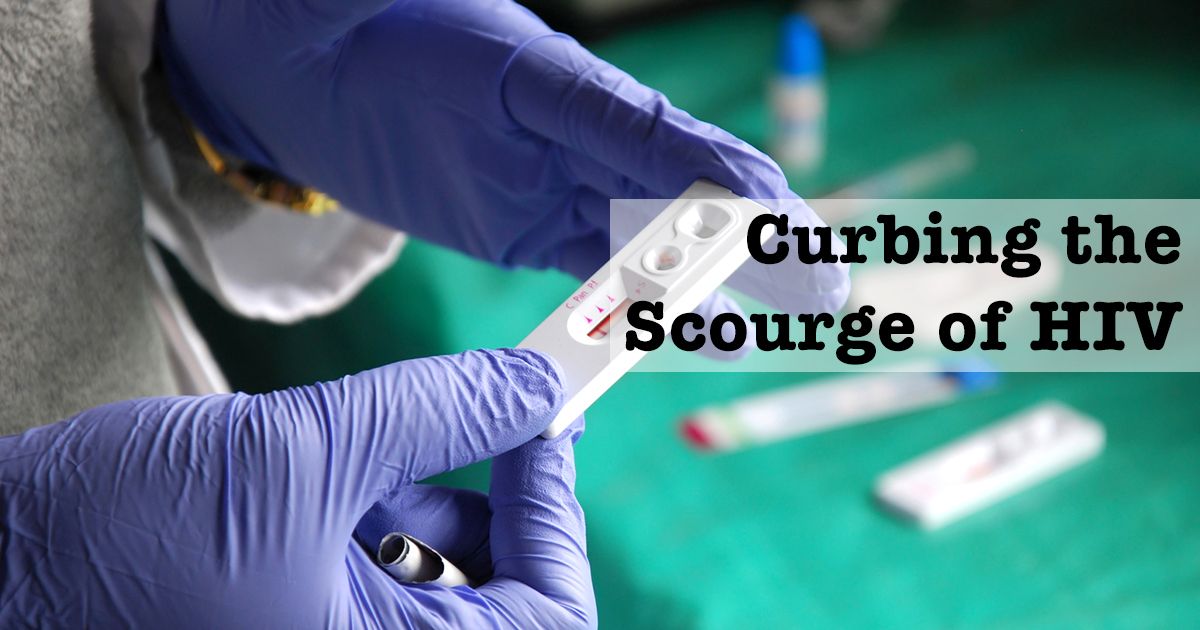
Recent advancements in technology and medical practices are helping curb the HIV pandemic that has haunted the globe for decades.
HIV can never be completely eliminated from the body and this deadly virus infects 2 million people annually. Therefore, efforts are being made worldwide to: help those affected by the virus; help prevent the virus from spreading further; and seek a cure.
The goal set by the United Nations (UN) and its partners such as World Health Organization (WHO) is to end the Aids epidemic by 2030. The milestones for the next five years are: to ensure that 90 percent of people who are HIV-positive are aware of their status; to make treatment for HIV available; and monitor that the 90 percent receiving treatment have suppressed viral loads.
HIV has kept scientists on their toes to find a cure. This clever and deadly virus has unique capabilities to alter itself making it a challenge to produce effective drugs. It is essential to look into the proteins involved in the virus’s lifecycle in order to develop appropriate drugs. The Capsid protein resides in the inner shell of HIV. It is this protein that forms the entire structure of the virus.
The virus’s genetic information is hidden within the Capsid shell which helps ensure the virus successfully infects the healthy cells. Research is still underway to gain a better understanding of how this protein shields the viral genome. The key to developing an antidote for the virus is to crack the code of the Capsid shell.
A team of scientists lead by Sarafianos at the University of Missouri, School of Medicine, are doing just that. In fact, they have successfully captured a fairly complete model of the Capsid protein. They used a process known as X-ray Crystallography to decipher the protein’s structure. The key to HIV’s adaptability is assumed, to be the numerous water molecules that surrounded the protein. The National Institute of Health has provided a five-year grant worth U.S. $2.28 million to fund the research geared towards finding an effective antiviral that will target the Capsid protein.
Would-be parents are encouraged to test for HIV, Syphilis and other Sexually Transmitted Diseases (STDs). In case either of the partners tests positive for the aforementioned diseases, the mother is given antiretroviral drugs to help prevent the baby from being infected.
Unless care is taken during childbirth, there is a 15-45 percent chance of the baby contracting the virus from its mother. Caesarean births are a relatively safer option as opposed to natural childbirth. This is because the child does not come into contact with the mother’s blood or genital fluids. However, women with a low viral load and on suitable antiretroviral treatment may be allowed to undergo natural childbirth.
Breast milk is also a known cause of HIV transmission between mother and child. The HIV-infected cells multiply in breast milk and enter into the child’s body through mucous membranes. The mother’s breast milk can be substituted for formula milk to prevent the transmission of HIV from mother to child.
Cuba has been declared by the World Health Organization (WHO) as the first country to eliminate mother to child transmission of HIV because in 2013 only 2 Cuban babies received the infection from their mothers. The aforementioned steps have been implemented by Cuba, nationwide. Cuba’s success is proof of the possibility to end mother-to-child transmission.
Cambodia is pioneering a community model that promotes fast HIV testing techniques and maximises community outreach.
In 2013 a programme named Smartgirl was launched in Cambodia. The key was to encourage people engaged in the adult entertainment industry to be tested for HIV. Veterans from the adult industry are recruited as counsellors who promote testing. As opposed to the cumbersome traditional HIV test involving drawing blood samples and then testing them in a laboratory environment, a quick finger prick test is being used. This community model proactively reaches out to more people ensuring a greater number of people are tested.
The future of our global fight against the deadly curse of HIV is not at all bleak. The world can be HIV free.

A study was conducted in two Australian cities namely Melbourne and Sydney to determine the effectiveness of a new drug for the treatment of HIV. A small sample group of 100 healthy non-HIV infected gay men who were eligible for HIV PEP (Post-exposure Prophylaxis) were part of the study.
Post-exposure Prophylaxis (PEP) is a medical term which refers to the use of anti-HIV drugs that can be consumed immediately after one has been exposed to HIV while Pre-exposure Prophylaxis (PEP) refers to treatment that is given in a situation where HIV infection seems possible and in this instance acts as a preventative measure. PEP drugs help prevent the virus from spreading into the body. People in need of PEP drugs include health care workers, who have been exposed to the virus while taking care of an HIV+ patient and those who have engaged in sexual intercourse with a person with HIV. Efforts are being made to increase access to PEP drugs to prevent the devastating effects of HIV on the global population.
Currently, most PEP regimens involve the use of three drugs that patients are required to take twice or sometimes three times a day. However, the painful side effects make it difficult for patients to complete the course of medication without medical supervision. These regimens are therefore not highly effective in preventing the spread of HIV in the patient’s blood.
Efforts are being made to alter PEP drugs so that people can successfully complete the drug regimen with little or no adverse effects. This will dramatically change the way HIV is perceived by people. It will no longer be a deadly virus, with no hopes for survival, but rather an illness which patients can fight through. The small sample group study proved to be a step closer towards achieving this goal.
The men who participated in the study were given a single tablet daily, consisting of the following drugs: Emtricitabine 200mg; Rilpivirine 25mg; and Tenofovir disoproxil fumarate 300mg.
These drugs are commonly referred to as Reverse Transcriptase Inhibitors (RTI) in medical terms. They are rapidly absorbed into the body before HIV spreads into the patient’s blood. Rapid absorption of a drug also plays a key role in its effectiveness. The fact that these drugs are rapidly absorbed into the body show that the drug regimen is highly effective. The group of men received treatment for 28 days. Over the next 12 weeks the participants were required to return for 7 follow-up study visits. During these study visits their blood samples were taken and the drug dosage re-evaluated. The purpose was to determine if any of the participants discontinued the drug regimen before the trial period of 28 days and also if any of the participants tested positive for HIV by the end of the 12 week trial.
One of the key measures of success of a drug regimen is how easily patients can take the drugs without medical supervision. Most people discontinue taking drugs because of the discomfort caused by the side-effects of the drug. In short the success rate of current PEP regimens is very low as people fail to continue drug intake throughout the course of the prescription.
In this study, 92 out of 100 participants completed the drug regimen. Amongst the 92 participants, 98.5% reported that they followed the drug regimen unsupervised. 78 participants returned their pill bottles at the end of the 28-day period and 98.6% of these had successfully completed the drug regimen. Overall 88 of the 100 men experienced negative side effects which included fatigue and nausea. Four participants experienced severe but not life-threatening effects from the drugs.
To verify the accuracy of the drugs, blood samples of 41 participants were tested within two days of the last dose at the end of the 4th week. All participants were reported to have high levels of drug concentration in their blood thus the drug regimen was successfully followed by the participants.
Although this was a small-scale study which does not provide substantial evidence regarding the effectiveness of the new PEP regimen, a promising sign is that none of the 70 men who attended the final follow-up visit tested positive for HIV by the end of the 12 week drug trial. The results from this small scale study look promote the need for a large-scale study to be conducted, involving core groups and control groups, to obtain statistically significant results. Results from a large-scale study can then be used to change the current PEP drug regimens that are in place.
A study was conducted in two Australian cities namely Melbourne and Sydney to determine the effectiveness of a new drug for the treatment of HIV. A small sample group of 100 healthy non-HIV infected gay men who were eligible for PEP (Pre-exposure Prophylaxis) were part of the study.
Post-exposure Prophylaxis (PEP) is a medical term which refers to the use of anti-HIV drugs that can be consumed immediately after one has been exposed to HIV while Pre-exposure Prophylaxis (PEP) refers to treatment that is given in a situation where HIV infection seems possible and in this instance acts as a preventative measure. PEP drugs help prevent the virus from spreading into the body. People in need of PEP drugs include health care workers, who have been exposed to the virus while taking care of an HIV+ patient and those who have engaged in sexual intercourse with a person with HIV. Efforts are being made to increase access to PEP drugs to prevent the devastating effects of HIV on the global population.
Currently, most PEP regimens involve the use of three drugs that patients are required to take twice or sometimes three times a day. However, the painful side effects make it difficult for patients to complete the course of medication without medical supervision. These regimens are therefore not highly effective in preventing the spread of HIV in the patient’s blood.
Efforts are being made to alter PEP drugs so that people can successfully complete the drug regimen with little or no adverse effects. This will dramatically change the way HIV is perceived by people. It will no longer be a deadly virus, with no hopes for survival, but rather an illness which patients can fight through. The small sample group study proved to be a step closer towards achieving this goal.
The men who participated in the study were given a single tablet daily, consisting of the following drugs: Emtricitabine 200mg; Rilpivirine 25mg; and Tenofovir disoproxil fumarate 300mg.
These drugs are commonly referred to as Reverse Transcriptase Inhibitors (RTI) in medical terms. They are rapidly absorbed into the body before HIV spreads into the patient’s blood. Rapid absorption of a drug also plays a key role in its effectiveness. The fact that these drugs are rapidly absorbed into the body show that the drug regimen is highly effective. The group of men received treatment for 28 days. Over the next 12 weeks the participants were required to return for 7 follow-up study visits. During these study visits their blood samples were taken and the drug dosage re-evaluated. The purpose was to determine if any of the participants discontinued the drug regimen before the trial period of 28 days and also if any of the participants tested positive for HIV by the end of the 12 week trial.
One of the key measures of success of a drug regimen is how easily patients can take the drugs without medical supervision. Most people discontinue taking drugs because of the discomfort caused by the side-effects of the drug. In short the success rate of current PEP regimens is very low as people fail to continue drug intake throughout the course of the prescription.
In this study 92 out of 100 participants completed the drug regimen. Amongst the 92 participants 98.5% reported that they followed the drug regimen unsupervised. 78 participants returned their pill bottles at the end of the 28-day period and 98.6% of these had successfully completed the drug regimen. Overall 88 of the 100 men experienced negative side effects which included fatigue and nausea. Four participants experienced severe but not life-threatening effects from the drugs.
To verify the accuracy of the drugs, blood samples of 41 participants were tested within two days of the last dose at the end of the 4th week. All participants were reported to have high levels of drug concentration in their blood thus the drug regimen was successfully followed by the participants.
Although this was a small scale study which does not provide substantial evidence regarding the effectiveness of the new PEP regimen, a promising sign is that none of the 70 men who attended the final follow up visit tested positive for HIV by the end of the 12 week drug trial. The results from this small scale study look promote the need for a large scale study to be conducted, involving core groups and control groups, to obtain statistically significant results. Results from a large scale study can then be used to change the current PEP drug regimens that are in place.
Original article: http://cid.oxfordjournals.org/content/early/2015/06/28/cid.civ511
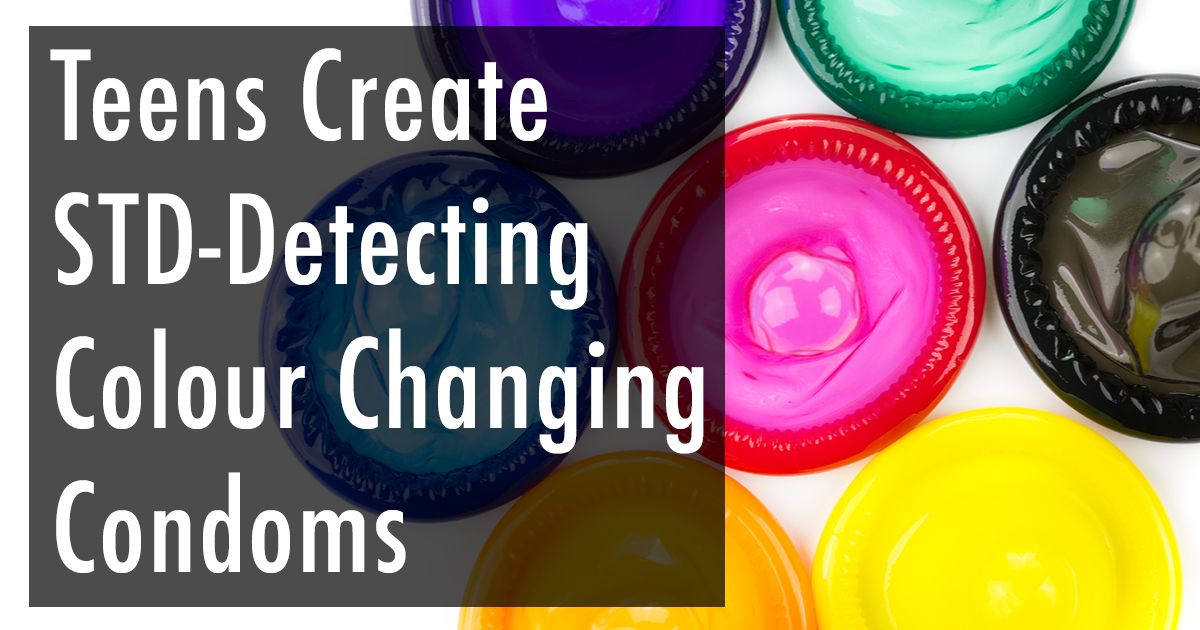
U.K’s Teen Tech Awards recently granted top honors to a group of three teenagers for their groundbreaking STD-detecting condoms. The teens, Daanyaal Ali (14), Muaz Nawaz (13), and Chirag Shah (14), named their concept S.T. Eye. These three students from the Isaac Newton Academy in England have initiated the development of condoms which change color when in contact with a sexually transmitted disease. Of course, it would take teens, whose ingenuities have not yet been tainted by the cynical world, to imagine such a brilliant idea. The concept involves creating a condom that is coated in antibodies which will react with the antigens in STDs resulting in a colour change.
Ali explained his team’s motivation behind this innovative design in an interview with The Daily Mail:
“We wanted to create something that makes detecting harmful STIs safer than ever before, so that people can take immediate action in the privacy of their own homes without the invasive procedures at the doctors,” he said. “We’ve made sure we’re able to give peace of mind to users and make sure people can be even more responsible than ever before.”
While the concept is certainly an effective idea towards impacting on the rising global STD rate, there remains many areas of concern. Firstly, an issue of whether the condom will detect an STD in the user or his partner has not been resolved as yet.
Secondly, the concern over the social impact of such a creation when put into practice needs to be addressed. Thirdly, a manual for post-color change may indeed be necessary or the whole expedition may be pointless. Finally, the effect of multiple STD’s on the condom has not yet been established. Clearly, this idea still requires much development before these condoms will be accessed by the greater public.
Maggie Philbin from Teen Tech reiterated this in a comment to The Post:
“I think the reason the judges put this idea first was because the project showed how much learning these boys had done while researching STD’s.”
Nonetheless, this intriguing concept won the students about $1,500 as well as a coveted opportunity to meet Prince Andrew at Buckingham Palace later this year. But, perhaps the greatest victory may be for global society since the students have already been approached by condom manufacturers and this outrageous idea is beginning to seem viable.
In a society where condom use is not the favored method of contraception and its inherent disease prevention benefit is often overlooked, this innovative idea may provide the incentive needed to encourage safer sex, globally. The immediate queries and concerns about the nitty-gritty of the condoms functionality greatly outweigh its far-reaching, long-term benefits.