Breakthroughs in HIV prevention are moving at a remarkable pace, with science fiction rapidly becoming scientific fact. The recent buzz from the International AIDS Society Conference centres on a potential game changer: an investigational once-monthly pill called MK-8527 that could make preventing HIV simpler than ever. This glimpse into a more convenient future is exciting, but it also shines a harsh light on the present. For many in Singapore, the hurdle isn’t the frequency of the dose; it’s the accessibility and affordability of the highly effective prevention tools we already have. This new development serves as a critical reality check, prompting a closer look at where Singapore stands today.
A New Era of Prevention with a Monthly PrEP Pill
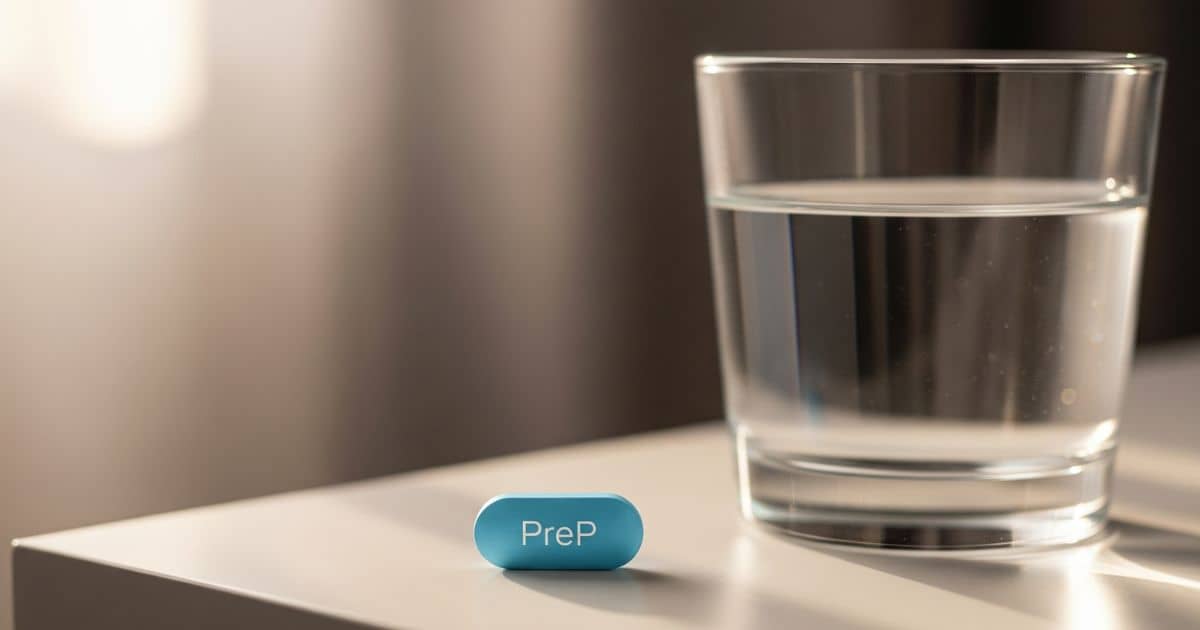
The promise of a once-monthly PrEP pill is hard to overstate. In trials, this new type of drug was found to be safe, well-tolerated, and capable of maintaining protective levels in the body for over a month, offering a margin of safety if a dose is taken late. For many, the simplicity of a monthly pill is a preferred option over daily medication or injections.
This investigational drug, known as MK-8527, is a novel nucleoside reverse transcriptase translocation inhibitor (NRTTI). Following promising mid-stage results, it is now moving into large-scale Phase III clinical trials. While it might not be available until 2028 at the earliest, its development represents a monumental step towards a future where HIV prevention is more user-friendly than ever before.
Why Singapore’s HIV Strategy Prioritises Treatment Over Prevention
This bright future of prevention stands in stark contrast to Singapore’s current landscape. The nation has achieved remarkable success in HIV treatment. Thanks to a world-class clinical care system and subsidised Antiretroviral Therapy (ART), an outstanding 94% of residents on treatment have an undetectable viral load. This means they cannot transmit the virus sexually, a principle known as Undetectable = Untransmittable (U=U), which is the most powerful prevention tool we have.
However, a dangerous paradox exists. While the Singapore government ensures affordable lifelong HIV treatment for its citizens through a multi-layered approach that includes universal health insurance under MediShield Life, dedicated withdrawals from personal MediSave accounts for antiretroviral therapy, direct means-tested drug subsidies from the Medication Assistance Fund, and MediFund as the ultimate financial safety net for those in need, it has made a policy decision not to subsidise the biomedical tool that prevents it: Pre-Exposure Prophylaxis (PrEP). PrEP is a daily or event-driven pill that is over 99% effective at preventing HIV when taken as prescribed. Despite being clinically endorsed by national health authorities, the out-of-pocket cost for a month’s supply in Singapore can exceed S$400.
This high cost creates a two-tiered prevention system, where the best tool is only available to those who can afford it. This financial barrier actively undermines public health goals and contributes to the ongoing challenge of new infections, particularly as over half of all new HIV cases in Singapore are diagnosed at a late stage.
How Taiwan’s PrEP Policy Offers a Different Path
To understand how different strategies can yield different results, we only need to look at Taiwan. Facing a similar challenge with an epidemic highly concentrated among men who have sex with men (MSM), Taiwan took a different path. In 2016, it launched Asia’s first government-funded PrEP pilot program, a pioneering but challenging initiative. The program faced intense opposition from conservative groups and was halted prematurely, enrolling less than a third of its target.
However, this apparent failure yielded a pivotal success: among the participants, the HIV seroconversion rate was an exceptionally low 0.3%. This powerful, locally-generated data provided the irrefutable evidence needed to overcome political resistance and justify a larger investment. Armed with this proof, the government launched a scaled-up national PrEP program in 2018.
The results have been clear and sustained. Coinciding directly with the program’s expansion, Taiwan has seen a decline in new HIV infections every year for six consecutive years. By the end of 2023, the number of annually reported new HIV diagnoses had fallen to a historic low of 940 cases. This demonstrates how a strategic, state-level investment in subsidised prevention can directly impact public health outcomes and accelerate the journey toward eliminating HIV.
What Taiwan’s Success Means for Singapore
The Taiwanese experience offers a powerful and more nuanced case study. Like Singapore, Taiwan has a long-standing commitment to state-funded HIV care, providing free Antiretroviral Therapy (ART) to its citizens since 1997. This forms the bedrock of their successful ‘Treatment as Prevention’ strategy.
However, where their approach critically diverges is in the decision to also invest public funds in biomedical prevention. By funding a national PrEP program, Taiwan demonstrated a commitment to a comprehensive strategy that attacks the epidemic from both sides: treating the virus to stop transmission and protecting HIV-negative individuals from acquiring it.
This highlights Singapore’s financial paradox more starkly. The choice is not between funding treatment or prevention; Taiwan’s model proves the most effective public health strategies fund both. This comparison makes it clear: individuals in Singapore cannot wait for policy changes and must take the initiative to find a prevention strategy that works for them today.
Understanding Your Current PrEP Options in Singapore
While the future monthly pill is on the horizon, your health cannot wait. Fortunately, highly effective and safe options for HIV prevention are available right now, and navigating them begins with professional medical guidance.
A confidential consultation at a STD clinic is the essential first step. Before starting any PrEP regimen, a doctor must conduct comprehensive HIV testing and STD testing to ensure it is a safe and appropriate option for you. At Shim Clinic, you can discuss your lifestyle and risk factors to determine the best strategy, which could be:
- Daily PrEP: A single pill taken every day, offering the highest level of protection for people with ongoing risk.
- Event-Driven PrEP (PrEP 2-1-1): A flexible dosing strategy for men who have sex with men, involving taking pills only around the time of sexual activity.
For those who may have had a recent high-risk exposure and are not on PrEP, HIV PEP (Post-Exposure Prophylaxis) remains a critical emergency option that must be started within 72 hours.
Taking Control of Your Sexual Health Today
The development of a once-monthly PrEP pill is a powerful reminder of how far science has come. It pushes us to imagine a future where ending the HIV epidemic is truly within our grasp. However, it also serves as a reality check, urging us to address the gaps in our current approach.
In Singapore, the biggest hurdle for many is not a lack of scientific innovation, but a lack of equitable access to it. Taking control of your sexual health means understanding both the possibilities of tomorrow and the practical steps you can take today.